
Ground-Up Commercial Construction: A Complete Guide From Site Prep to Completion
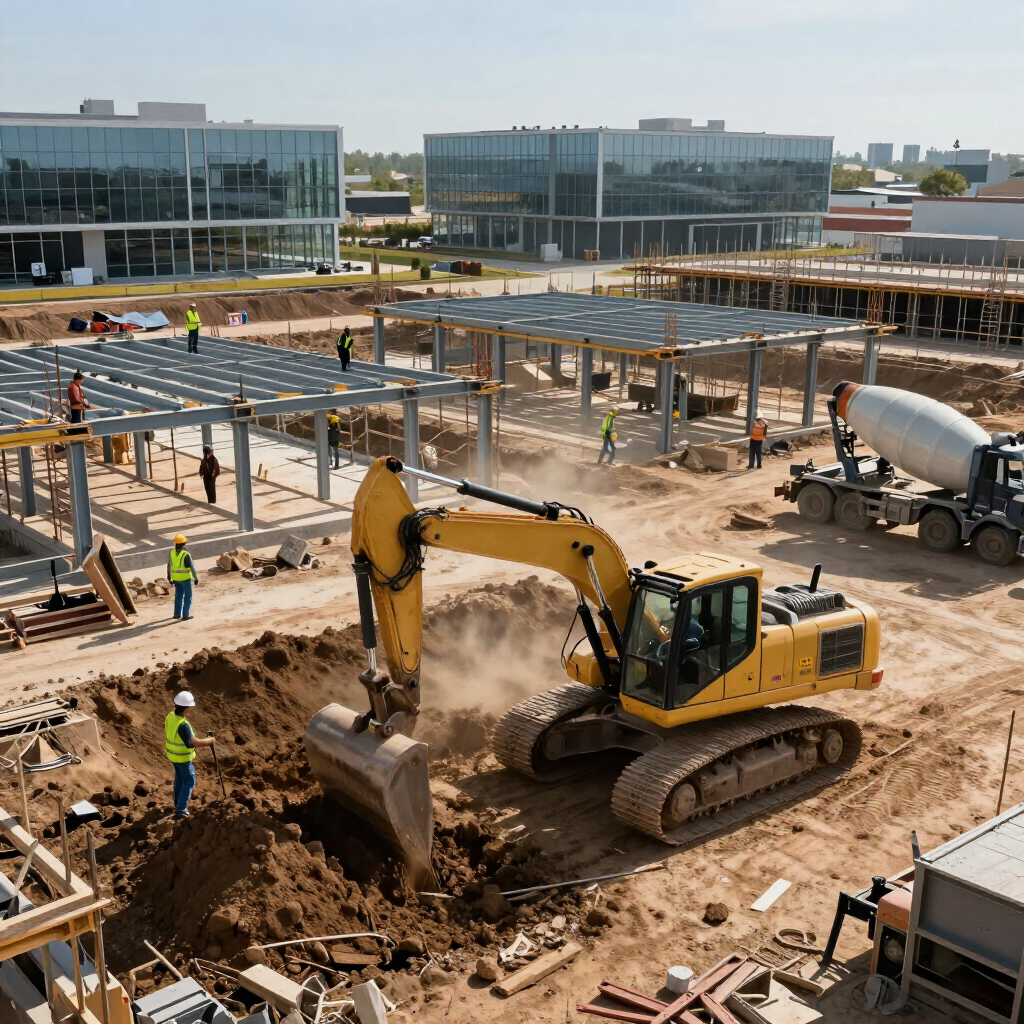
Ground-up commercial construction is the process of developing a commercial building from an undeveloped or prepared site through final completion. It typically includes site preparation, foundation work, structural construction, building systems, interior finishes, inspections, and turnover. Successful projects depend on careful planning, coordination, safety, scheduling, and experienced construction management from the earliest stages.
For developers and business owners, understanding this process can make it easier to establish realistic budgets, evaluate contractors, anticipate important decisions, and keep a project moving toward its intended opening or occupancy date.
Rodbuster Machado LLC provides commercial construction services nationwide, including new construction, site preparation and land development, foundation and tilt panel rebar, wire mesh, demolition, renovations, and tenant improvements.
What Is Ground-Up Commercial Construction?
Ground-up commercial construction means creating a new commercial structure starting essentially from the ground level rather than renovating an existing building.
Depending on the property and project, work can begin with clearing, grading, demolition, or other site-development activities before moving into foundations and vertical construction.
Ground-up projects can include:
- Warehouses and distribution facilities
- Retail buildings
- Office properties
- Restaurants
- Franchise locations
- Industrial facilities
- Healthcare facilities
- Hospitality properties
- Educational buildings
- Mixed-use developments
- Municipal and government facilities
Unlike remodeling, where the construction team must work within the limitations of an existing structure, new construction gives owners and developers greater freedom to design a property around its intended use.
That flexibility also creates significant responsibility. Decisions made during planning and early construction can affect virtually every later phase of the project.
What Are the Main Stages of Ground-Up Commercial Construction?
Although every project is different, a typical commercial new-build project moves through several major stages.
| Construction Stage | Typical Focus |
|---|---|
| Pre-construction | Scope, planning, budgeting and scheduling |
| Site preparation | Clearing, grading and preparing the property |
| Foundation | Excavation, reinforcement and concrete |
| Structural construction | Building frame and structural systems |
| Building enclosure | Roofing, exterior walls, doors and windows |
| MEP systems | Mechanical, electrical and plumbing |
| Interior construction | Walls, ceilings, finishes and fixtures |
| Inspections | Code and project compliance |
| Closeout | Punch list, documentation and turnover |
Understanding how these stages connect is important because a delay or problem early in construction can affect several phases that follow.
Stage 1: Pre-Construction Planning
Successful construction begins before equipment arrives at the site.
Pre-construction is when owners, developers, designers, contractors, and other project stakeholders establish the foundation for execution.
Depending on the project delivery method and scope, pre-construction can address:
- Project objectives
- Plans and specifications
- Preliminary schedules
- Budget considerations
- Constructability
- Material requirements
- Site conditions
- Logistics
- Procurement
- Contractor responsibilities
- Potential project risks
This stage is also an opportunity to identify issues before they become expensive field problems.
For example, a site-access limitation that appears minor on paper could become significant once large equipment and material deliveries begin. Identifying the challenge early gives the project team more time to develop a workable plan.
For commercial owners comparing contractors, pre-construction is also an excellent time to evaluate communication and project-management capabilities.
Internal linking opportunity: [Commercial New Construction –https://www.rodbustermachadollc.net/]
Stage 2: Commercial Site Preparation and Land Development
Before a building can rise, the property needs to be ready to support construction.
Commercial site preparation can involve several activities depending on the site's existing condition and the approved development plan.
Common work may include:
- Site clearing
- Removal of debris
- Existing-structure demolition
- Excavation
- Rough grading
- Soil preparation
- Construction access
- Drainage-related work
- Utility coordination
- Preparing building areas
A previously developed site may require demolition before new construction can begin. An undeveloped property may need extensive clearing and grading.
The exact requirements depend on the site, design, soil conditions, local requirements, and intended building.
Site preparation shouldn't be treated as an isolated preliminary task. The quality and accuracy of early site work can influence foundations, drainage, utilities, access, paving, and other downstream construction activities.
Stage 3: Foundation and Concrete Reinforcement
Once the site is properly prepared, construction moves toward the foundation.
The foundation transfers loads from the structure into the ground, making accurate construction and proper reinforcement critical.
Depending on the design, reinforcement may include rebar and wire mesh.
Rebar is commonly used to reinforce concrete and help it resist tensile forces. Reinforcement requirements are determined by the project's engineered plans and specifications.
Rodbuster Machado LLC provides specialized services that include:
- Foundation rebar
- Tilt panel rebar
- Wire mesh services
These capabilities are particularly relevant for commercial and industrial projects that rely heavily on reinforced concrete.
Internal linking opportunity: [Foundation Rebar & Tilt Panel Rebar]
Why Is Rebar Important in Commercial Foundations?
Concrete performs extremely well under compression but has less tensile strength. Reinforcing steel helps concrete structural elements handle tensile forces and improve overall structural performance according to the engineered design.
The American Concrete Institute publishes standards, technical resources, and guidance relating to concrete construction.
External resource: [American Concrete Institute]
Correct reinforcement placement must follow the project's drawings and specifications. This is one reason experienced crews and careful coordination matter during foundation construction.
Stage 4: Structural Construction
Once the foundation reaches the appropriate stage, vertical construction can begin.
The structural system creates the primary framework of the commercial building.
The exact method varies considerably depending on the design and intended use. Commercial buildings may incorporate:
- Structural steel
- Reinforced concrete
- Tilt-up concrete panels
- Masonry
- Metal building systems
- Combinations of structural materials
For warehouses and certain industrial or commercial buildings, tilt-up construction may be part of the structural strategy.
In tilt-up construction, concrete wall panels are generally cast horizontally and then lifted into position.
Reinforcement within the panels plays an important role in meeting the engineered structural requirements.
This is where specialized tilt panel rebar experience can be especially valuable.
Stage 5: Building Enclosure
After the primary structure is established, the project progresses toward creating a weather-resistant building enclosure.
Depending on the design, this phase can include:
- Exterior walls
- Roofing systems
- Insulation
- Doors
- Windows
- Storefront systems
- Exterior finishes
- Weatherproofing components
Getting the building enclosed can be an important scheduling milestone because it allows more interior activities to proceed with greater protection from weather.
Coordination is crucial.
Exterior systems need to connect properly with structural elements and other building components to help manage water, air, and environmental exposure.
Stage 6: Mechanical, Electrical, and Plumbing Systems
Modern commercial buildings depend on extensive building systems.
Mechanical, electrical, and plumbing—often referred to collectively as MEP—can represent a substantial part of commercial construction.
Systems vary according to the building's intended use.
A warehouse may have very different HVAC, electrical, fire-protection, and plumbing requirements than a restaurant, healthcare facility, or office building.
This phase requires careful coordination among trades because multiple systems often need to occupy limited spaces above ceilings, inside walls, and throughout utility areas.
Poor coordination can result in conflicts that require field changes.
Good planning helps ensure systems are installed in a logical sequence and according to approved project documents.
Stage 7: Interior Construction and Tenant Improvements
As the building becomes enclosed and major systems progress, interior construction becomes increasingly visible.
Interior work may include:
- Framing
- Drywall
- Ceilings
- Flooring
- Painting
- Doors and hardware
- Millwork
- Fixtures
- Specialty finishes
For some projects, the base building may be constructed first and individual spaces completed later through tenant improvements.
Tenant improvements customize commercial space for a specific occupant.
For example, a retail tenant may need sales-floor areas, storage, offices, fitting rooms, and brand-specific finishes. A restaurant may require specialized kitchen infrastructure and dining areas.
Rodbuster Machado LLC provides commercial tenant improvement services in addition to new construction, allowing businesses to address both base-building and space-specific construction needs.
Internal linking opportunity: [Tenant Improvements]
Stage 8: Quality Control, Inspections, and Punch List
As construction approaches completion, the focus increasingly shifts toward verifying that work meets project requirements.
Commercial projects can involve inspections throughout construction, not simply at the end.
Requirements vary according to jurisdiction, project type, and scope.
Contractors should maintain quality-control processes throughout the job rather than waiting until closeout to identify problems.
Near completion, the project team typically develops a punch list identifying remaining or corrective items.
These could include:
- Finish corrections
- Hardware adjustments
- Paint touch-ups
- Fixture issues
- Cleanup
- Incomplete installations
- Other project-specific corrections
Resolving punch-list items efficiently is an important part of reaching final turnover.
Stage 9: Project Closeout and Turnover
Construction isn't complete simply because the building looks finished.
Closeout is the process of completing remaining contractual and administrative requirements and transitioning the property to the owner.
Depending on the project, closeout documentation may include items such as:
- Warranties
- Product information
- Operations documentation
- Inspection records
- Final project documents
- Required approvals
- Punch-list completion records
A well-managed closeout helps the owner transition from construction into occupancy and ongoing building operations.
How Long Does Ground-Up Commercial Construction Take?
There is no universal timeline for a commercial building.
Project duration depends on factors such as:
- Building size
- Project complexity
- Site conditions
- Design
- Permitting and approvals
- Material availability
- Weather
- Labor availability
- Structural system
- Owner changes
- Inspection schedules
- Location
- Supply-chain conditions
A smaller commercial project may progress much differently from a large warehouse, healthcare facility, industrial building, or mixed-use development.
For that reason, businesses should be cautious about generic construction timelines found online.
A realistic schedule should be developed around the specific project's scope and conditions.
How Can Owners Keep Ground-Up Construction on Track?
Owners and developers can support successful execution by making decisions promptly and maintaining clear communication with their construction team.
Useful practices include:
- Define the scope early. Unclear expectations can create changes later.
- Establish communication procedures. Know who makes decisions and how information will be shared.
- Review schedules regularly. Understand upcoming milestones and critical decisions.
- Address changes quickly. Delayed approvals can affect subsequent activities.
- Track long-lead materials. Certain products may need to be ordered well in advance.
- Maintain documentation. Keep decisions, changes, approvals, and project information organized.
- Choose experienced contractors. Relevant commercial experience can help teams anticipate challenges before they disrupt the project.
Commercial construction is a collaborative process. Owners, contractors, architects, engineers, suppliers, and subcontractors all influence the outcome.
Why Choose a Full-Service Commercial Construction Company?
Working with a contractor that can support multiple construction phases may simplify project coordination.
Instead of treating demolition, site preparation, structural work, construction, and improvements as disconnected activities, a broader construction partner can help maintain continuity between phases.
This can be especially useful for organizations managing projects in different markets.
A nationwide construction company can also provide a consistent point of contact as a business expands into additional states.
For developers, franchise operators, retailers, industrial businesses, and multi-location companies, consistency can become increasingly valuable over time.
FAQs About Ground-Up Commercial Construction
What does ground-up construction mean?
Ground-up construction generally means constructing a completely new building rather than renovating an existing structure. The process begins with the site and progresses through foundations, structural construction, building systems, interior work, inspections, and final turnover.
What comes first in commercial construction?
Pre-construction planning generally comes first. Once plans, approvals, scope, and other requirements are ready, physical work may begin with demolition, clearing, grading, excavation, or other site-preparation activities depending on the property.
What's the difference between ground-up construction and remodeling?
Ground-up construction creates a new building, while commercial remodeling modifies an existing structure. New construction generally offers greater design flexibility, while remodeling can allow an owner to reuse an existing property.
Why is site preparation important for commercial buildings?
Site preparation creates the conditions necessary for subsequent construction. Grading, clearing, excavation, soil preparation, access, and other early activities can directly affect foundations, drainage, utilities, paving, and the overall construction sequence.
When should I contact a commercial construction contractor?
It's beneficial to involve a qualified commercial contractor as early as practical. Early discussions can help clarify construction scope, site considerations, scheduling, materials, logistics, and potential challenges before fieldwork begins.
Start Your Ground-Up Commercial Project With Rodbuster Machado LLC
A successful ground-up commercial construction project requires much more than building walls and installing finishes. It requires careful coordination from the first site activities through structural construction, interior completion, inspections, and turnover.
Rodbuster Machado LLC provides nationwide commercial construction capabilities for businesses, developers, property owners, and organizations planning new commercial projects.
Services include commercial new construction, site preparation and land development, commercial demolition, tenant improvements, foundation and tilt panel rebar, wire mesh, and commercial remodeling and renovations.
Whether you're developing a warehouse, retail location, office, franchise property, industrial facility, or another commercial building, having an experienced construction partner can help keep the many phases of development connected.
CTA: Contact Rodbuster Machado LLC to discuss your ground-up commercial construction project, project location, scope, and construction requirements.
Internal linking opportunity: [Rodbuster Machado LLC]
Ready to Start Your Project?
Looking for reliable commercial construction services? Rodbuster Machado LLC is ready to help.
Contact us today to discuss your project, request a consultation, or get an estimate.